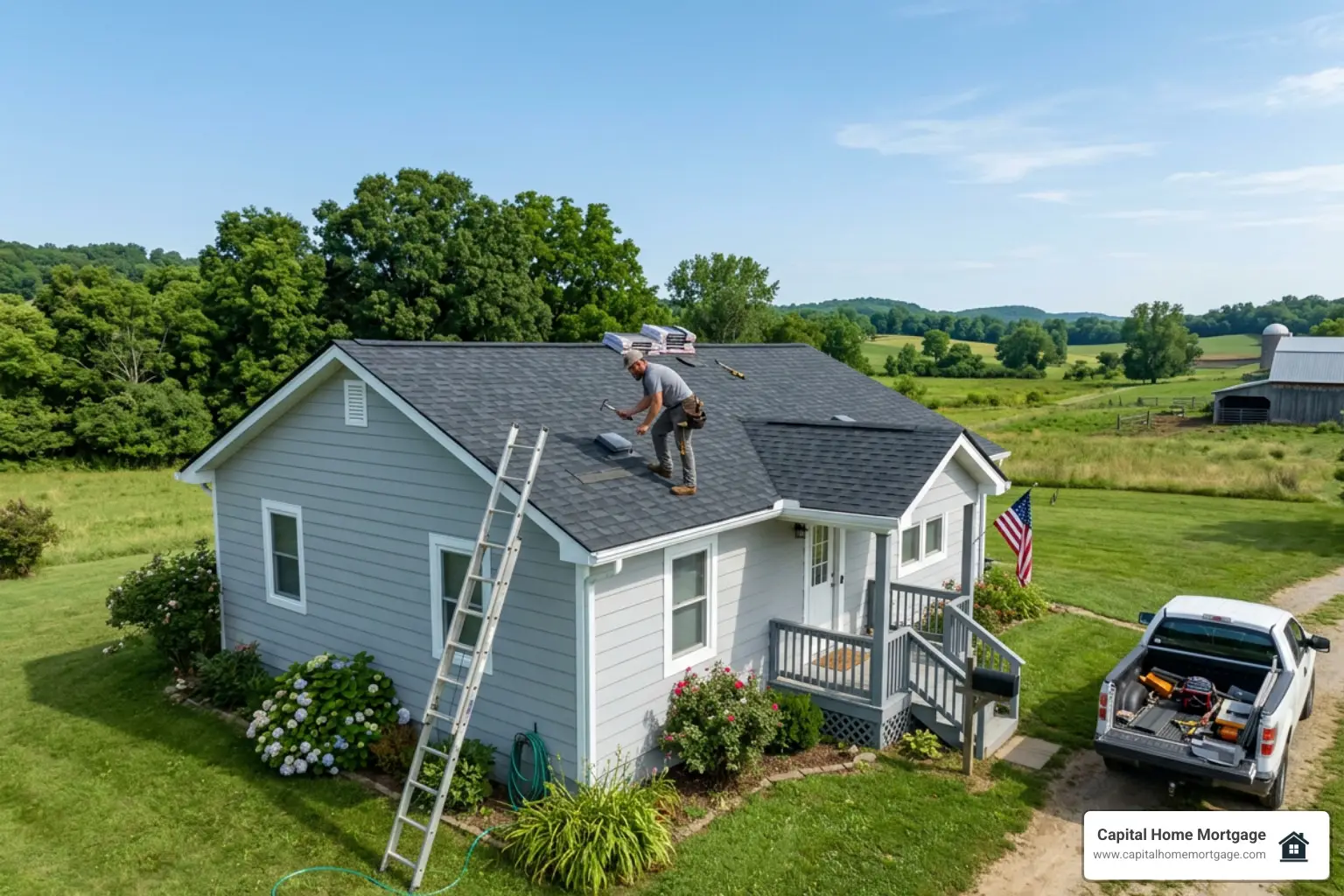
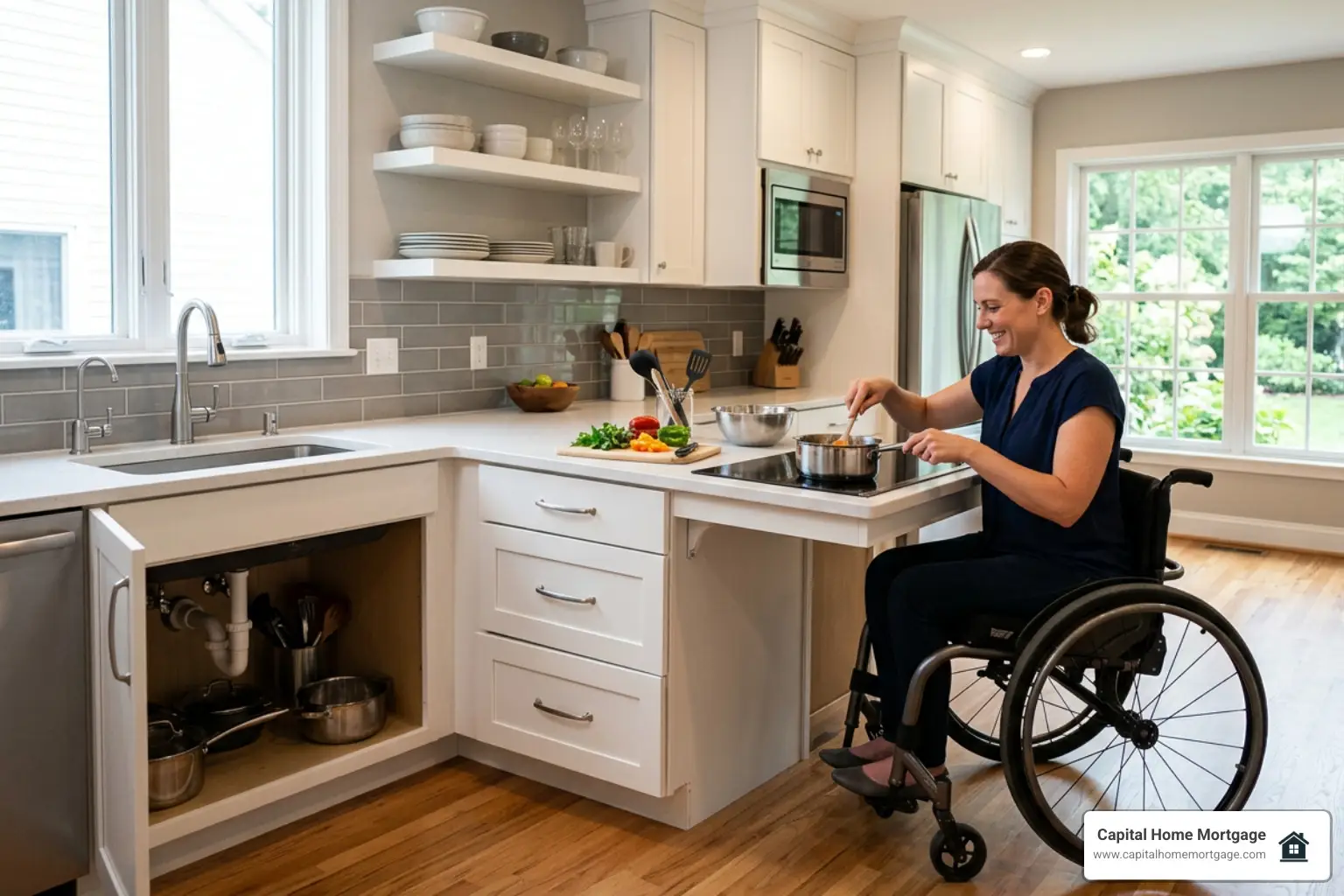
Choosing the Right Townhouse Renovation Mortgage for Your Property
A townhouse renovation mortgage lets you finance the purchase price and the remodel budget in one loan based on the home’s after-repair value, so you can buy an attached property that needs work without draining cash reserves or stacking multiple financing obligations on top of your primary mortgage. Finding a home that checks every single box right out of the gate is rare. In fact, research shows that about 66% of first-time buyers choose second-hand homes, which frequently require updates like a redesigned kitchen, better insulation, or a layout extension. Attached properties, such as townhomes and row houses, offer fantastic locations and architectural character, but they also come with unique financing hurdles when repairs are needed. Instead of draining your cash reserves or juggling multiple high-interest debts, single-close financing lets you wrap the purchase price and rehabilitation budget into a single long-term loan.
When selecting financing for an attached home, the biggest advantage is borrowing against the after-repair value (ARV) rather than the property’s current, unimproved condition. An appraiser inspects the property alongside your contractor’s detailed bid to calculate what the home will be worth once all upgrades are finished. This future-equity approach allows you to secure substantial funding for major modernizations while keeping your loan-to-value (LTV) ratio within program limits.
| Loan Program | Minimum Down Payment | Primary Eligible Repairs | Ideal For |
|---|---|---|---|
| FHA 203(k) Standard | 3.5% | Major structural changes, layout alterations, roofing, plumbing, HVAC | Properties needing substantial structural or mechanical rehabilitation |
| FHA 203(k) Limited | 3.5% | Non-structural repairs up to $35,000 (cosmetic, kitchens, flooring, paint) | Minor cosmetic and modernization updates |
| Conventional Renovation (Fannie Mae / Freddie Mac) | 3% to 5% | Structural and luxury upgrades (pools, high-end finishes, outdoor living) | Borrowers with strong credit seeking flexible renovation allowances |
| VA Renovation | 0% (for eligible veterans) | Essential repairs, modernizations, safety and accessibility updates | Eligible military service members, veterans, and surviving spouses |
How a Townhouse Renovation Mortgage Works
A single-close renovation loan simplifies your financing by eliminating the need for temporary short-term financing followed by a separate permanent loan. At closing, the funds allocated for the property purchase (or the existing mortgage payoff in a refinance) are disbursed to the seller, while the repair funds are placed directly into an interest-bearing escrow account.
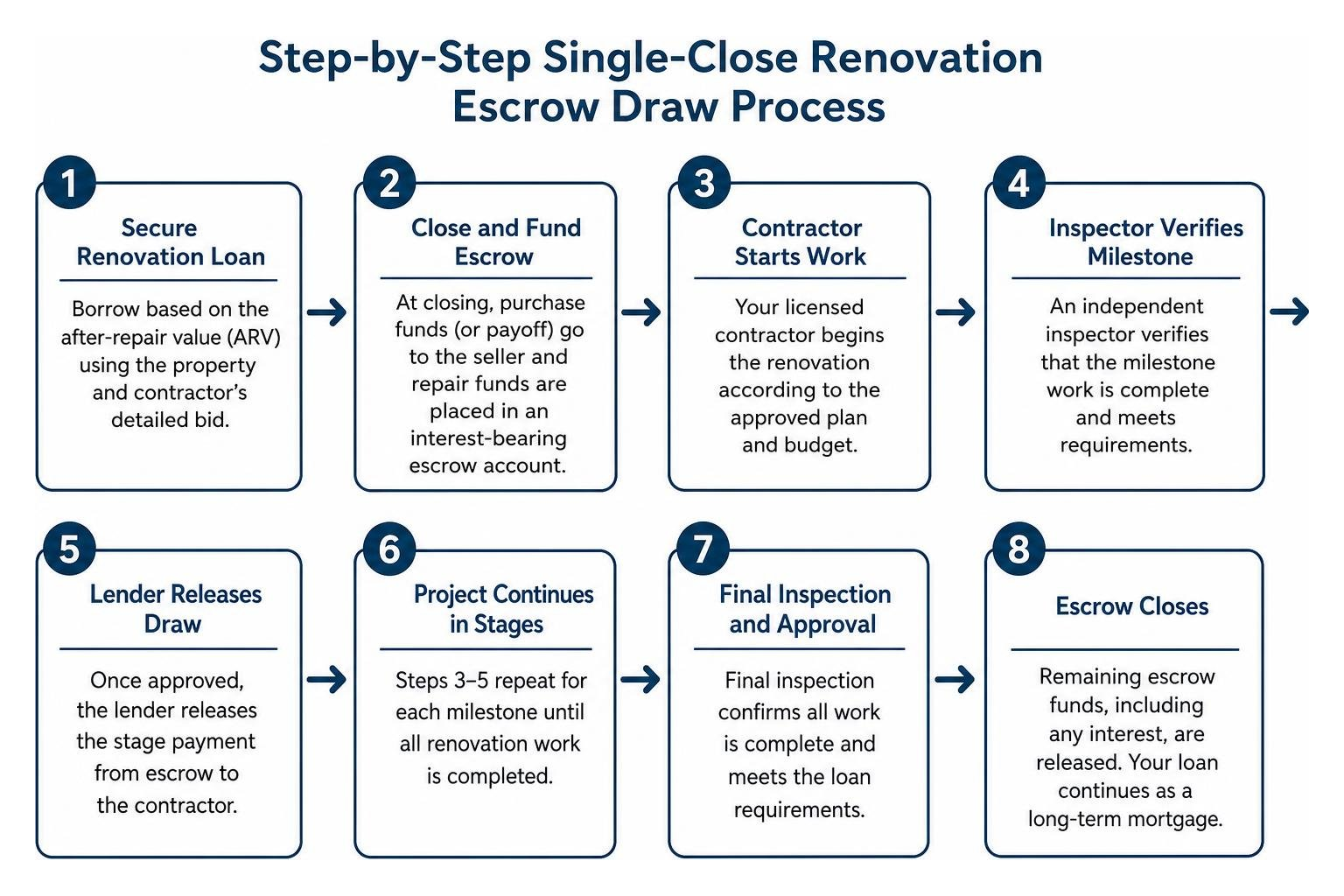
As your licensed contractor completes specific milestones of the project, an independent inspector verifies the work. Once signed off, the lender releases stage payments from the repair escrow. Renovation loans also include a built-in contingency reserve—typically between 10% and 20% of the total estimated repair costs—to absorb unforeseen expenses like hidden electrical issues or party-wall repairs without disrupting your personal budget. For an in-depth breakdown of government-backed rehabilitation guidelines, check out our comprehensive FHA 203k Renovation Loan Guide.
Comparing Government-Backed and Conventional Renovation Options
Choosing the right loan structure depends on your credit profile, the property’s condition, and your long-term financial plans:
- FHA 203(k) Loans: Designed for flexible credit qualification and lower down payments. The Limited program covers cosmetic updates up to $35,000, while the Standard program handles major structural reconfigurations, foundation repairs, and substantial mechanical replacements.
- Conventional Renovation Loans: These programs allow higher loan limits and provide greater flexibility for luxury improvements, such as custom cabinetry, high-end appliances, and shared-wall soundproofing systems.
- VA Renovation Loans: A standout option for qualifying service members, offering up to 100% financing with zero down payment to cover both the acquisition and necessary repairs.
Lending parameters, local building codes, and loan limits vary widely across regions. Whether you are exploring Renovation Home Loans in Texas or evaluating options for Renovation Home Loans in Florida, partnering with an experienced direct lender ensures your project meets all jurisdictional and appraisal standards.
Energy-Efficiency Considerations
Modernizing a townhouse offers an ideal opportunity to reduce ongoing utility expenses. Incorporating energy-efficient upgrades—such as multi-pane window replacements, advanced insulation along exterior and party walls, and high-efficiency HVAC equipment—not only cuts utility bills, but can also help you qualify for expanded borrowing limits through specialized energy-improvement programs. According to the U.S. Department of Energy, air sealing and insulation upgrades can reduce heating and cooling costs by up to 15% in attached homes, making these improvements a practical part of a townhouse renovation mortgage. For additional context on how renovation financing supports energy improvements, the U.S. Department of Energy provides guidance on air sealing and insulation best practices.
Step-by-Step Guide to Renovating a Townhouse with Single-Close Financing

Attached homes require specialized coordination due to shared party walls, common structural elements, and homeowners association (HOA) covenants. Following a structured roadmap ensures your project stays on schedule and fully compliant with lender and municipal guidelines.
Step 1: Pre-Approval and Budgeting for As-Completed Value
Before drafting blueprints, secure a formal mortgage pre-approval. At Capital Home Mortgage, our direct in-house processing and underwriting team reviews your credit profile, assets, and debt-to-income (DTI) ratio upfront. This establishes your maximum purchase price and rehabilitation budget based on your target neighborhood’s post-renovation equity potential.
Step 2: Contractor Selection and HOA Architectural Review
Renovation mortgages require work to be completed by licensed, insured, and experienced general contractors. In a townhouse setting, your contractor must provide:
- A detailed, itemized statement of costs and materials (Scope of Work).
- A timeline with scheduled draw milestones.
- Clear provisions for shared-wall protection and structural integrity.
- Formal submissions for HOA architectural approval and municipal building permits.
Step 3: Appraisal, Underwriting, and Escrow Draw Management
Once contractor bids and architectural plans are submitted, the appraiser performs a “subject-to-completion” valuation. After underwriting approval, you sign closing documents in a single closing. Construction begins immediately after settlement:
- Permit Issuance: Contractor secures local permits and sets the build schedule.
- Phase Completion & Inspections: As work reaches defined milestones, third-party inspectors evaluate quality and compliance.
- Escrow Disbursements: Funds are drawn from escrow and paid directly to the contractor.
- Final Inspection & Title Update: A final walk-through verifies 100% completion, leading to the issuance of a Certificate of Occupancy.
Refinancing vs. Purchase Renovation Strategies for Townhomes
If you already own an attached home that requires substantial modernization, you don’t need to relocate to get the home you want. You can restructure your existing mortgage balance and construction costs into one new loan using a renovation refinance.
Many homeowners debate between a traditional equity release and a single-close renovation refinance. If you have substantial accrued equity and want to fund straightforward updates without altering your primary mortgage terms, a Cash-Out Mortgage Refinance may provide the cash you need.
However, if your desired remodel costs exceed your current equity, a renovation refinance calculates borrowing capacity based on the future appraised value—allowing you to finance extensive structural overhauls up to 90% or more of the as-completed value. If you are exploring your options in the Mountain West, our specialists handling Renovation Home Loans in Colorado can model both scenarios to determine the most cost-effective path.
Qualifying for a Townhouse Renovation Mortgage Refinance
Qualifying for a renovation refinance involves verifying your household income, credit history, and property eligibility. The primary benefit is rolling all construction costs directly into your low-rate primary mortgage balance, avoiding the high interest rates, short repayment windows, and balloon payments common to unsecured debt and short-term financing.
Frequently Asked Questions About Townhome Renovations
What repairs are permitted under a single-close renovation mortgage?
Single-close renovation loans cover a broad spectrum of improvements, including:
- Complete kitchen and bathroom remodels.
- Structural alterations, load-bearing wall removals, and floor plan reconfigurations.
- Upgrading HVAC, electrical panels, and plumbing lines.
- Roof repairs, masonry tuckpointing, and exterior siding.
- HOA-compliant exterior doors, windows, and decks.
How does the appraisal determine the loan amount for an attached property?
The appraiser assesses the current property condition and thoroughly reviews the contractor’s formal scope of work. By analyzing recent comparable sales of updated townhouses within your immediate subdivision or market, the appraiser assigns an as-completed appraised value. Your maximum loan amount is then calculated based on this future value rather than the purchase price alone.
Can you use renovation financing for energy efficiency and shared-wall insulation?
Yes. Financing can be applied to soundproofing shared party walls, installing high-density thermal insulation, upgrading to energy-efficient heat pump systems, and replacing drafty windows. These updates enhance indoor comfort, reduce monthly utility overhead, and improve acoustics between adjoining properties.
Conclusion
Attached homes offer prime locations and long-term appreciation potential, and using single-close financing eliminates the cash flow barriers that often stall major remodels. By wrapping acquisition and construction costs into one loan with a single monthly payment, you can confidently turn any fixer-upper into your dream home.
At Capital Home Mortgage, our direct in-house processing and underwriting deliver rapid approvals, reliable on-time closings, and dedicated loan officer support every step of the way. Explore our full suite of Renovation Home Loans today to start planning your townhome upgrade.