What Is the Average Interest Rate on a Mobile Home in 2026?
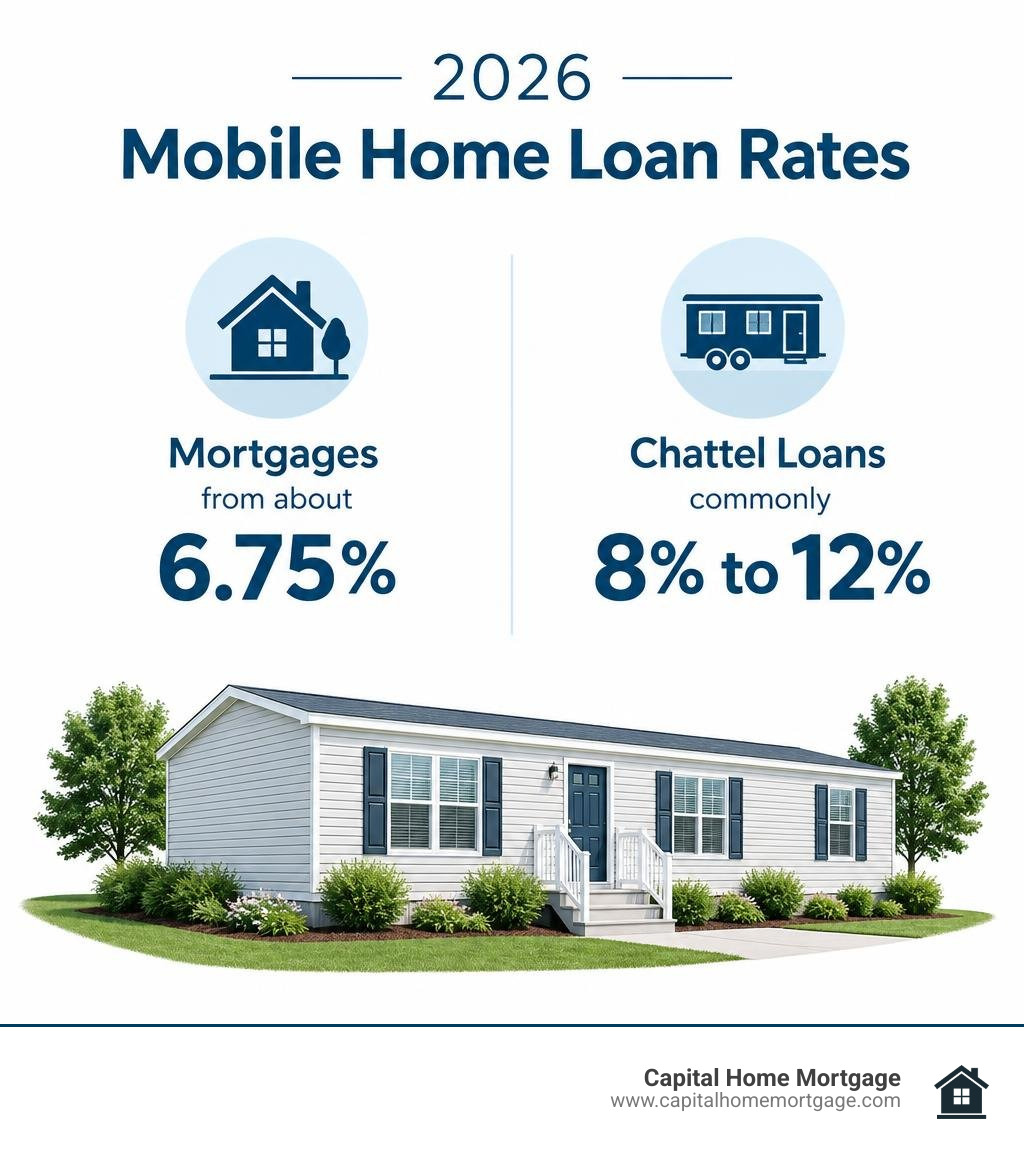
There is no single national average for mobile home loans in 2026. Rates can start around 6.75% for well-qualified borrowers, while chattel loans, which finance the home as personal property, commonly run 8% to 12%. For a measured comparison, the 2024 median was 7.88% for manufactured-home mortgages and 9.5% for personal-property loans.
The key question is whether you can finance the home and land as real estate or need a chattel loan. That choice can change both your rate and your fees, so compare APR, not just the advertised interest rate.
I’m Dale Gremillion, a manager at Capital Home Mortgage with more than 26 years of experience in mortgage operations. I’ll walk you through what the average interest rate on a mobile home can tell you—and what to check before you accept a quote.
Terms related to average interest rate on a mobile home:
- 15 year mortgage rates manufactured home
- 30 year manufactured home loans
- 30 year mortgage rates manufactured home
Current Average Interest Rate on a Mobile Home in 2026
As of October 2026, baseline interest rates for manufactured homes that qualify as real estate begin near 6.75% for top-tier borrowers. However, the broader market reflects a wider spread. Real estate-backed manufactured home loans carry a median rate hovering near 7.88%, while homes financed as personal property (movable personal assets) see median rates around 9.5%, frequently stretching from 8% to 12%.
By contrast, traditional site-built homes often enjoy mortgage rates around 6.5% to 6.8%. This gap exists because lenders evaluate risk differently across property categories. As detailed in the SUERF Policy Brief on manufactured home financing costs, manufactured housing originations carry an average rate spread that is roughly 1.4 percentage points higher than site-built properties.
Furthermore, loan denial disparities remain significant throughout the industry. Standard site-built purchase applications see denial rates around 10%, but manufactured home loan applications face rejection rates approaching nearly 60%, particularly when processed without real estate collateral.
| Loan Program / Structure | Property Classification | Typical 2026 Rate Range | Down Payment Requirement | Max Loan Term |
|---|---|---|---|---|
| Conventional (Fannie/Freddie) | Real Property (Land + Home) | 6.75% – 7.85% | 3% – 5% | 30 Years |
| FHA Title II | Real Property (Land + Home) | 6.50% – 7.50% | 3.5% | 30 Years |
| VA Home Loan | Real Property (Land + Home) | 6.25% – 7.25% | 0% | 30 Years |
| USDA Rural Housing | Real Property (Land + Home) | 6.25% – 7.25% | 0% | 30 Years |
| Chattel Loan | Personal Property (Home Only) | 8.00% – 12.00% | 5% – 20% | 15 – 25 Years |
| Seller / Owner Financing | Personal or Real Property | 8.00% – 14.00% | 10% – 20% | 5 – 15 Years |
| Unsecured Personal Loan | Personal Property | 12.00% – 36.00% | 0% | 5 – 7 Years |
Chattel vs. Real Property: How Classification Shapes the Average Interest Rate on a Mobile Home
The single biggest factor dictating your financing expense is legal property classification: personal property versus real property.
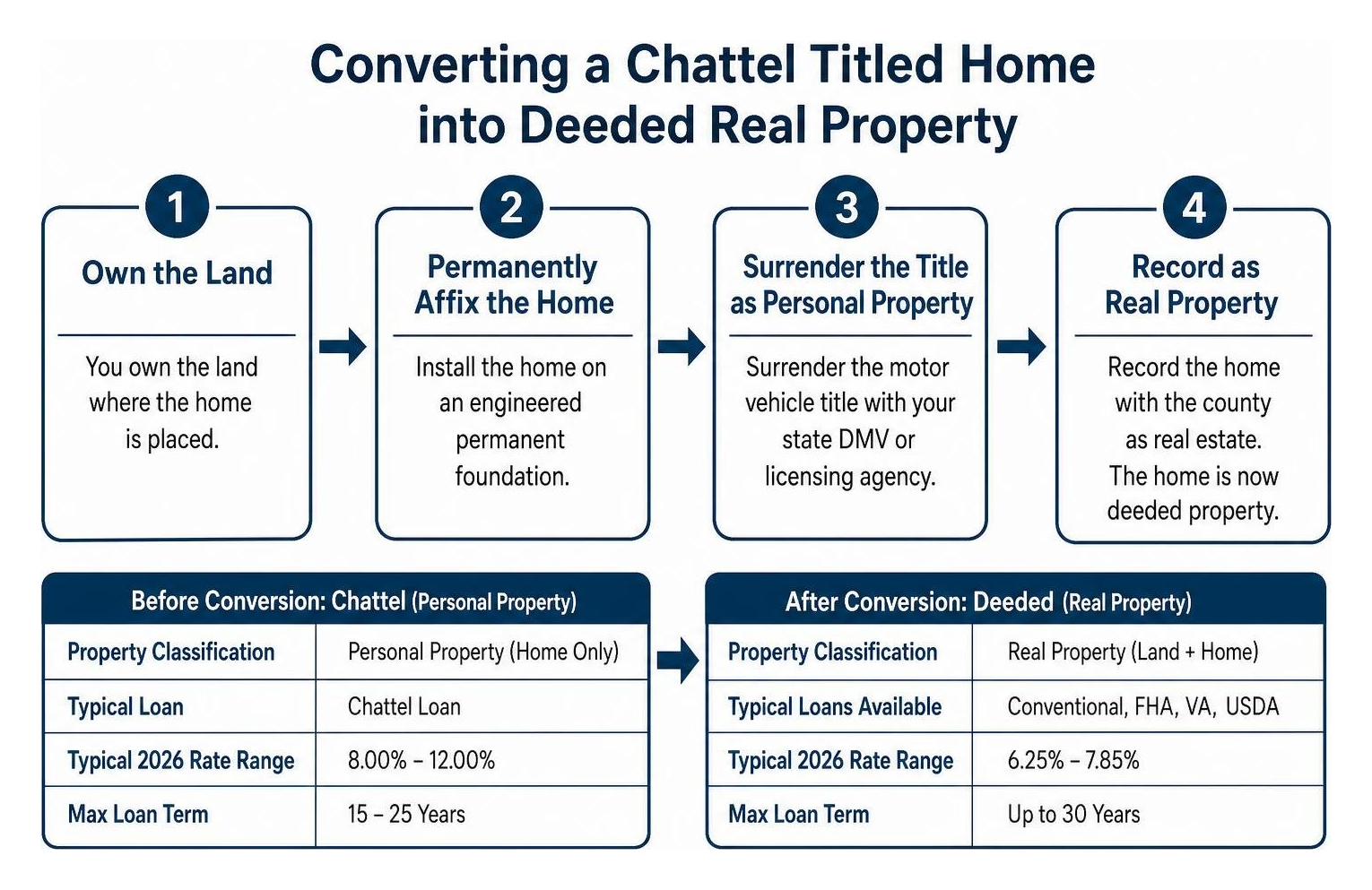
When a manufactured home is placed inside a leased-lot community or on private land without permanent structural affixture, it is titled through a state department of motor vehicles or licensing agency as personal property. Financing this structure requires a chattel loan. Because the lender cannot secure a lien against the underlying ground, they face higher collateral risk. As highlighted in an NMP report on manufactured home lending expenses, personal property financing elevates interest rates because secondary mortgage investors view movable units as depreciating collateral.
Conversely, if you own the land and legally affix the home to an engineered permanent foundation, you can surrender the motor vehicle title and record the home as real estate. This transition unlocks residential mortgage financing where 30-year mortgage rates for manufactured homes explained by our team show substantial savings over the life of the loan.
Loan Types Compared: Traditional Mortgages vs. Chattel Financing
Choosing between a real estate mortgage and a chattel loan involves weighing monthly payment sizes against upfront site preparation requirements.

To secure a traditional mortgage, the unit must be built after June 15, 1976, verifying compliance with federal HUD Code standards. It must also have its red HUD certification tags intact and rest upon a permanent foundation system designed to meet local wind and frost-depth engineering criteria.
Specialized conventional loan programs, such as Fannie Mae MH Advantage and Freddie Mac HomeReady, offer fixed interest rates that closely mirror site-built homes. Borrowers who combine land ownership with an eligible modern unit can access terms extending out to 30 years, lowering monthly debt obligations. Reviewing where to find the best 30-year mobile home loan options gives you a clear sense of what qualifies for these programs.
Chattel notes, by comparison, do not require land ownership or complex title conversions. They close faster—often in two to three weeks—making them popular for homes in resident communities. The trade-off is shorter amortization periods (typically 15 to 23 years) and rates ranging between 8% and 12%, resulting in higher monthly interest costs for identical borrowing amounts.
How Government Loan Programs Impact the Average Interest Rate on a Mobile Home
Government-backed financing offers some of the most competitive interest rates in manufactured housing.
- FHA Title II: Requires the home and land to be titled together as real property, offering down payments as low as 3.5% with competitive interest rates for credit scores down to 580.
- FHA Title I: Can finance the home alone, the lot alone, or both combined. It serves as an accessible bridge for units on leased land, though interest rates sit higher than Title II.
- VA Home Loans: Provide eligible active-duty military, veterans, and surviving spouses with zero-down-payment financing, no monthly mortgage insurance, and exceptionally low rates when attached to deeded land.
- USDA Rural Housing: Delivers 100% financing (zero down payment) for manufactured homes situated in eligible rural census tracts, keeping borrowing costs affordable for working families.
Many park residents struggle to access standard government programs due to restrictive community rules or non-deeded lot leases. As explored in a Keel Team analysis on chattel lending challenges, high personal property rates leave many vacant park spaces unfilled. When you can satisfy real property conversion standards, mastering how to secure the best 15-year manufactured home mortgage rates through government-backed products can cut total financing expenses in half.
Key Factors Influencing Manufactured Housing Interest Costs
Lenders evaluate risk using specific criteria when generating an interest rate quote for factory-built housing:

- Credit Score: FICO scores above 700 unlock the lowest base rates. Mid-tier scores (580 to 669) remain eligible for FHA products, though they carry slight rate premiums.
- Down Payment / LTV: Putting down 10% to 20% reduces the lender’s exposure, lowering your offered interest margin compared to minimum-down options.
- Debt-to-Income (DTI) Ratios: Keeping total recurring debts below 43% of gross income proves you can manage your payments, securing better pricing tiers.
- Lender Market Concentration: Unlike standard mortgages, the chattel sector is heavily concentrated among a few national lenders, often leading to wider interest spreads.
To secure the lowest rate, follow these actionable steps:
- Pull your credit reports early to correct errors and pay down revolving balances before applying.
- Secure an engineer’s foundation certification upfront if financing home and land together.
- Request official Loan Estimates from multiple lenders and compare the Annual Percentage Rate (APR) rather than just base interest rates.
Property Age and Foundation Requirements
Underwriting rules require strict adherence to construction and foundation guidelines:
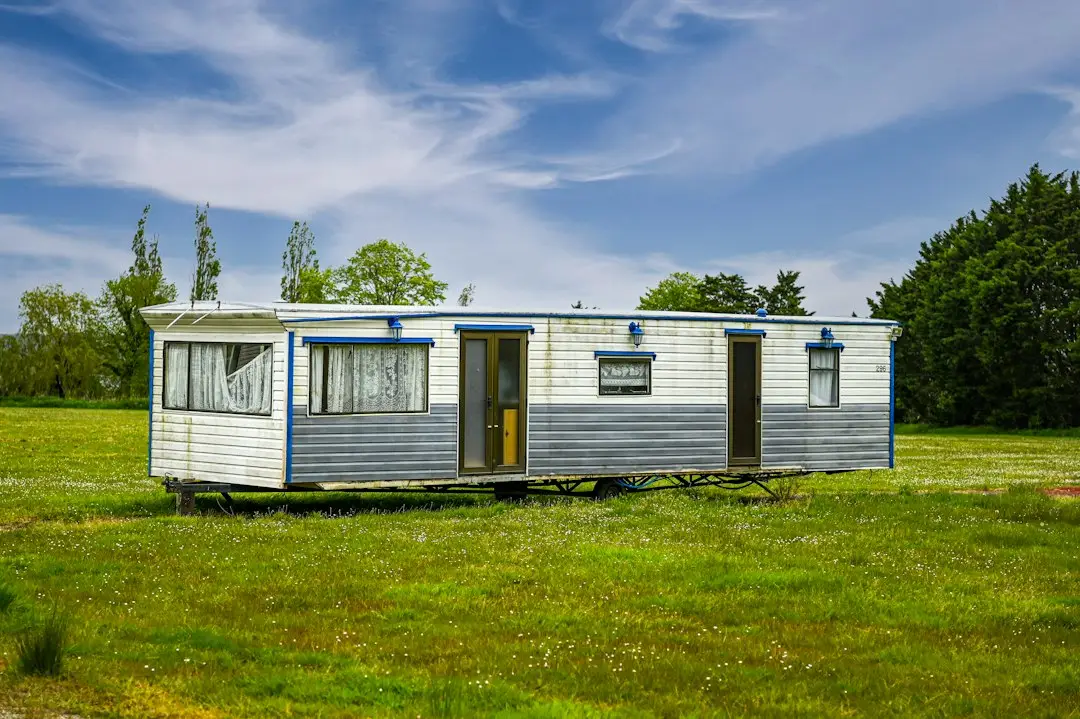
- HUD Code Compliance: Homes constructed prior to June 15, 1976 (pre-HUD “mobile homes”) are not eligible for conventional or government-backed mortgages. Only specialized chattel or personal loan products cover these units.
- Single-Wide vs. Double-Wide: Double-wide and multi-section homes appraise higher, appreciate more predictably, and qualify for lower conventional mortgage rates. Single-wide homes encounter tighter lender restrictions and slightly higher rate spreads.
- Foundations: Moving from basic pier-and-beam blocking with vinyl skirting to a retrofitted concrete slab, poured crawlspace, or basement foundation with tie-downs upgrades your home’s stability. Our specialists handling Arizona manufactured home loans regularly assist clients through structural retrofits to transition properties onto lower mortgage rate sheets.
Frequently Asked Questions About Manufactured Home Financing
Why are mobile home loan rates higher than traditional mortgage rates?
Lenders charge higher interest rates because manufactured homes are often titled as personal property rather than real estate. Unaffixed homes carry higher default and repossession risks, and the secondary market for purchasing chattel paper is much smaller than the multi-trillion-dollar market for conventional residential mortgages.
What credit score is required to buy a manufactured home in 2026?
Borrowers generally need a minimum credit score of 580 for government-backed FHA loans and 620 for conventional programs like Fannie Mae MH Advantage. Chattel lenders may approve credit scores down to 550, but compensating factors—such as a 15% to 20% down payment—are often required to balance the risk.
Can you refinance a chattel loan into a traditional mortgage?
Yes. If you own the underlying parcel of land, you can place the home on an approved permanent foundation, cancel the motor vehicle title through your state authority, and record the property as real estate. Once converted, you can refinance your higher-rate chattel debt into a low-rate conventional, FHA, or VA mortgage.
Conclusion
Securing the best terms on factory-built housing comes down to finding the right loan structure. Whether you are buying land and a home together or retrofitting an existing property, understanding the difference between personal property and real estate financing protects you from overpaying on interest.
At Capital Home Mortgage, we manage every step of the mortgage process directly. Our in-house processing and dedicated underwriting eliminate third-party delays, delivering fast approvals, competitive rates, and reliable, on-time closings. To review current rates or speak with a dedicated loan officer, explore Texas manufactured home loan options and discover how our team can structure the right financing for your home.