
FHA Home Loans Make Homeownership More Accessible
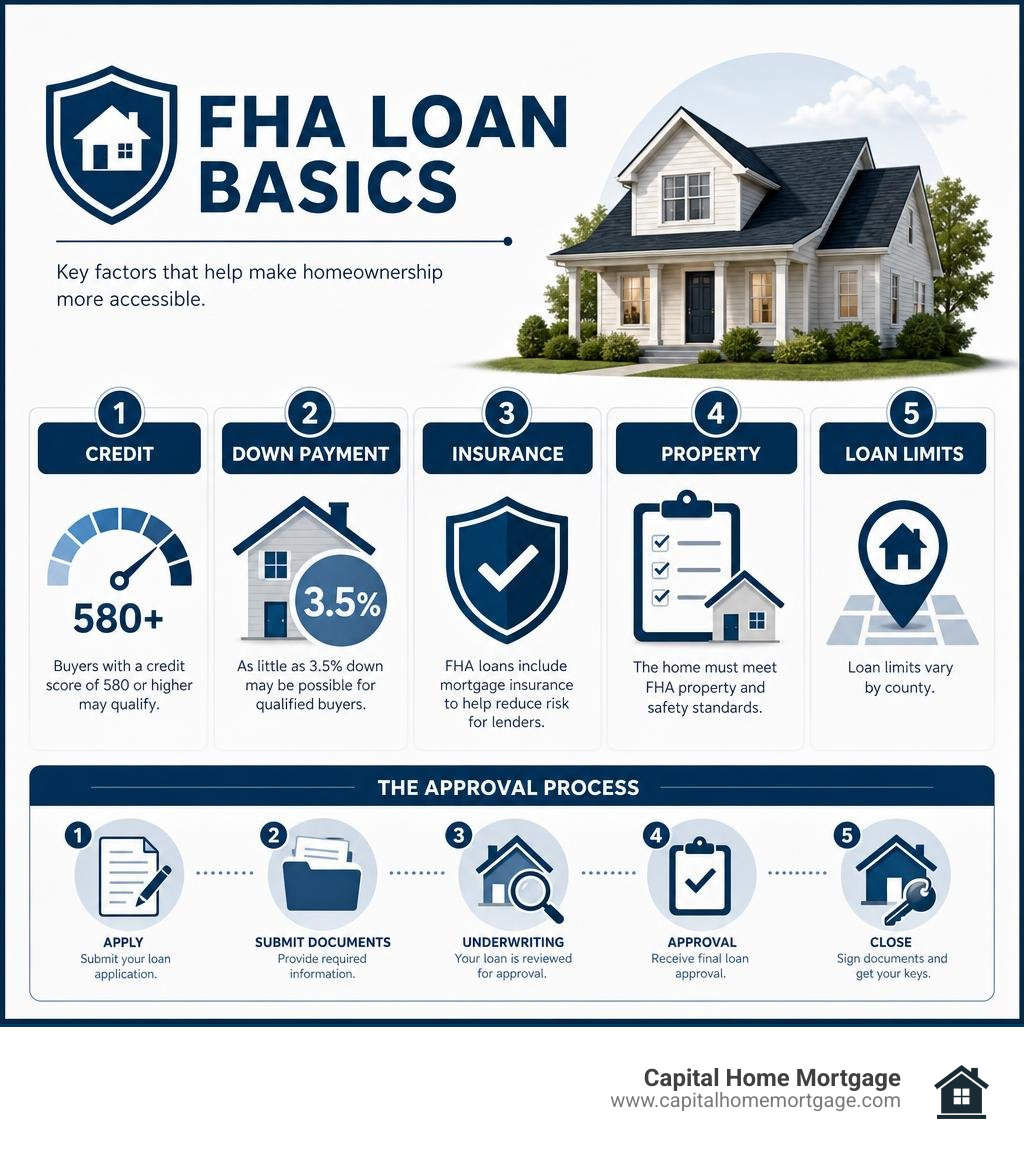
FHA home loans are government-insured mortgages designed to help buyers qualify with less cash saved and more flexible credit standards. Buyers with a credit score of 580 or higher may qualify with as little as 3.5% down. Those with scores from 500 to 579 may still qualify with 10% down, subject to lender approval and other underwriting rules.
The Federal Housing Administration, part of HUD, insures these loans rather than lending money directly. That insurance reduces risk for lenders and can open a path to buying a primary residence for people who may not meet conventional mortgage requirements. More than 80% of FHA-insured purchase loans go to first-time homebuyers each year.
FHA financing is not only for first-time buyers. It can also support eligible buyers of single-family homes, approved condos, certain manufactured homes, and properties with up to four units. The trade-off is mortgage insurance, property-condition rules, and loan limits that change by county.
I am Dale Gremillion, a manager at Capital Home Mortgage with more than 26 years of mortgage-industry management experience. I help support a full range of mortgage options, including FHA home loans, with clear guidance from application through closing.
Understanding FHA Financing and Eligibility Criteria

The core purpose of FHA financing is to expand access to affordable home financing across the country. Established under the National Housing Act, the Federal Housing Administration manages the Mutual Mortgage Insurance Fund (MMIF). This self-funded insurance pool reimburses approved lenders if a borrower defaults on their mortgage payments. Because the government assumes this portion of the credit risk, lenders are empowered to offer more favorable interest rates, lower down payment thresholds, and lenient underwriting parameters.
To participate in the Single Family Housing program, borrowers must intend to use the subject property as their primary residence. Investment properties and vacation homes do not qualify for FHA backing. Understanding how these baseline criteria compare to traditional mortgages is the first step in deciding which financing path best aligns with your financial profile.
Comparing Conventional Mortgages and FHA Home Loans
When deciding between conventional financing and an FHA mortgage, the major differences revolve around credit expectations, initial cash outlay, and mortgage insurance structures. Conventional mortgages follow guidelines set by Fannie Mae and Freddie Mac. They often reward borrowers who have higher credit scores and larger down payments, whereas FHA loans are designed to accommodate everyday financial hurdles.
Borrowers can review official federal resources via FHA and Housing Resources to explore how these programs are structured. The table below illustrates the primary differences between the two loan options:
| Feature | Conventional Loan | FHA Loan |
|---|---|---|
| Minimum Credit Score | Typically 620 | 580 (for 3.5% down) / 500 (for 10% down) |
| Minimum Down Payment | 3% to 5% | 3.5% (with score ≥ 580) |
| Mortgage Insurance | Private Mortgage Insurance (PMI) if down payment < 20% | Upfront MIP (1.75%) + Annual MIP |
| PMI / MIP Removal | Automatically cancels at 78% LTV (or requested at 80%) | Remains for loan life if down payment < 10%; cancels after 11 years if ≥ 10% |
| Debt-to-Income Limit | Typically capped around 36%–45% | Standard ceiling of 43% (higher with compensating factors) |
| Property Standards | Standard appraisal guidelines | Strict HUD Minimum Property Standards (health and safety focus) |
Credit Score, Down Payment, and Debt-to-Income Rules
Qualifying for an FHA mortgage involves three core financial metrics: your credit score, your available down payment, and your debt-to-income (DTI) ratio.
- Credit Score and Down Payment: Borrowers with a credit score of 580 or better qualify for the signature 3.5% down payment program. If your credit score falls between 500 and 579, you can still secure an FHA-insured loan by providing a minimum 10% down payment.
- Debt-to-Income (DTI) Ratio: Your DTI measures how much of your gross monthly income goes toward recurring debts (such as student loans, credit cards, auto financing, and your proposed mortgage payment). The benchmark FHA maximum DTI ratio is 43%. However, automated underwriting systems can approve higher ratios when solid compensating factors exist—such as significant cash reserves or a history of managing high housing expenses.
- Employment and Income Stability: Lenders require proof of steady employment and consistent earnings over the previous two years.
To evaluate your numbers before shopping for properties, completing a texas fha pre-qualification helps verify your purchasing power early in the process.
Eligible Property Standards and Appraisal Guidelines
FHA loans are versatile and accommodate a variety of property types, provided the home satisfies strict habitability benchmarks. Eligible property types include:
- Single-family detached residences
- 2- to 4-unit residential multi-family buildings (as long as the borrower occupies one unit as their primary residence)
- Condominiums located within HUD-approved communities (or single units approved via spot-loan guidelines)
- Manufactured homes affixed to permanent foundations that meet local and federal building codes
Every property must undergo an inspection by an FHA-approved appraiser. Unlike a standard valuation, an FHA appraisal evaluates both market value and compliance with HUD’s Minimum Property Standards. The appraiser checks for structural integrity, adequate heating, safe electrical wiring, clean water access, sound roofing, and the absence of peeling lead-based paint on homes built before 1978. Review the official HUD appraisal standards for an exhaustive breakdown of property criteria.
Core Advantages and Disadvantages of FHA Home Loans
Before committing to any mortgage solution, weighing the clear financial advantages against the long-term commitments is essential for making an informed investment.
Key Benefits for First-Time Homebuyers
FHA financing remains one of the most reliable vehicles for building personal wealth through real estate. The primary advantages include:
- Low Initial Cash Outlay: The 3.5% down payment keeps your out-of-pocket costs manageable, leaving you with cash reserves for maintenance and moving expenses.
- Gift Funds Allowed: The entire down payment and closing costs can be funded through documented gifts from family members, employers, or verified assistance programs.
- Seller-Paid Closing Costs: Sellers are permitted to contribute up to 6% of the purchase price toward your closing costs, prepaids, and discount points.
- Non-Occupant Co-Signers: Borrowers with limited income can include a family member as a non-occupant co-signer to strengthen loan eligibility.
These flexible guidelines make affordable housing mortgage options a practical entry point into the real estate market.
Mortgage Insurance Premiums and Regional Loan Limits
The primary trade-off of FHA financing is the requirement for mortgage insurance premiums (MIP), which consist of two parts:
- Upfront Mortgage Insurance Premium (UFMIP): A one-time fee equal to 1.75% of the base loan amount, payable at closing or financed directly into your total loan balance.
- Annual Mortgage Insurance Premium: An annual fee calculated as a percentage of the remaining balance (ranging from 0.15% to 0.75% depending on loan term, size, and LTV) and divided into 12 monthly payments added to your mortgage statement.
If you put down less than 10%, your annual MIP remains for the life of the loan. If your down payment is 10% or greater, the MIP cancels after 11 years.
Additionally, FHA loans are subject to regional maximum loan limits updated annually. These limits are divided into “floor” limits for low-cost housing markets and “ceiling” limits for high-cost metropolitan areas. You cannot borrow more than the established limit for the county in which the home is located.
Specialized Loan Options and Application Steps
In addition to standard home purchases, the FHA offers a selection of specialized loan programs to match specific housing needs. Federal initiatives like Let FHA Loans Help You provide targeted assistance for unique property purchases.
Specialized Options: Renovation, Construction, and Senior FHA Home Loans
- FHA 203(k) Renovation Loans: This program allows buyers to combine the purchase price of a fixer-upper and the costs of required repairs or upgrades into a single mortgage. Explore 203k renovation loans to see how rehabilitation financing works.
- One-Time Close Construction Loans: For buyers building a home from the ground up, construction loan options combine interim construction financing and permanent long-term financing into one closing.
- Home Equity Conversion Mortgages (HECM): The FHA-insured reverse mortgage enables seniors aged 62 and older to convert home equity into tax-free cash flow without making monthly mortgage payments.
- Energy-Efficient Mortgages (EEM): Borrowers can finance energy-saving home improvements directly into their standard FHA loan without needing an additional down payment.
How to Apply for an FHA Loan
Securing an FHA mortgage follows a structured, step-by-step procedure:

- Lender Selection: Choose a direct, full-service mortgage lender authorized by HUD to originate and underwrite FHA loans in-house.
- Document Gathering: Assemble your financial records, including recent pay stubs (30 days), W-2 statements and federal tax returns (2 years), bank statements (2 months), and valid government identification.
- Loan Submission & Underwriting: Complete your formal application. Securing a verified texas fha tru approval provides full underwriter verification before you make an offer on a house.
- Appraisal and Property Review: An FHA appraiser assesses the property to verify its value and confirm it meets minimum safety standards.
- Final Approval and Closing: Clear any remaining underwriting conditions, review your Closing Disclosure (CD), sign the loan paperwork, and receive the keys to your home.
Frequently Asked Questions About FHA Mortgages
What is the minimum credit score required for an FHA loan?
The minimum qualifying credit score is 580 to access the 3.5% down payment tier. Borrowers with credit scores between 500 and 579 can still qualify if they provide a 10% down payment. Individual lenders may have their own internal credit benchmarks, so consulting directly with an underwriter is recommended.
Can an FHA loan be used to purchase a multi-unit property?
Yes. FHA loans can finance multi-family properties containing up to 4 residential units, provided you occupy one of the units as your primary residence. You can even use a portion of the projected rental income from the remaining units to help qualify for the mortgage.
How long does FHA mortgage insurance last on a loan?
For loans where the initial down payment is less than 10%, the annual mortgage insurance premium remains in effect for the entire life of the loan. If your down payment is 10% or more, the annual MIP automatically cancels after 11 years. Borrowers who build substantial home equity can also choose to refinance into a conventional mortgage down the road to eliminate private mortgage insurance entirely.
Conclusion
FHA home loans continue to offer an accessible route to homeownership, pairing low down payment thresholds with flexible underwriting standards. At Capital Home Mortgage, we are a direct, full-service mortgage lender managing every step of the process in-house. Our dedicated loan officers and internal underwriting team work directly with you to eliminate delays, secure fast approvals, and ensure on-time closings.
Whether you are buying your first house or planning a multi-unit investment, explore our competitive rates on Texas FHA home loans and take your next confident step toward owning a home. Contact our lending team today to get started.


