
Compare Home Loan Rates Before You Choose a Loan
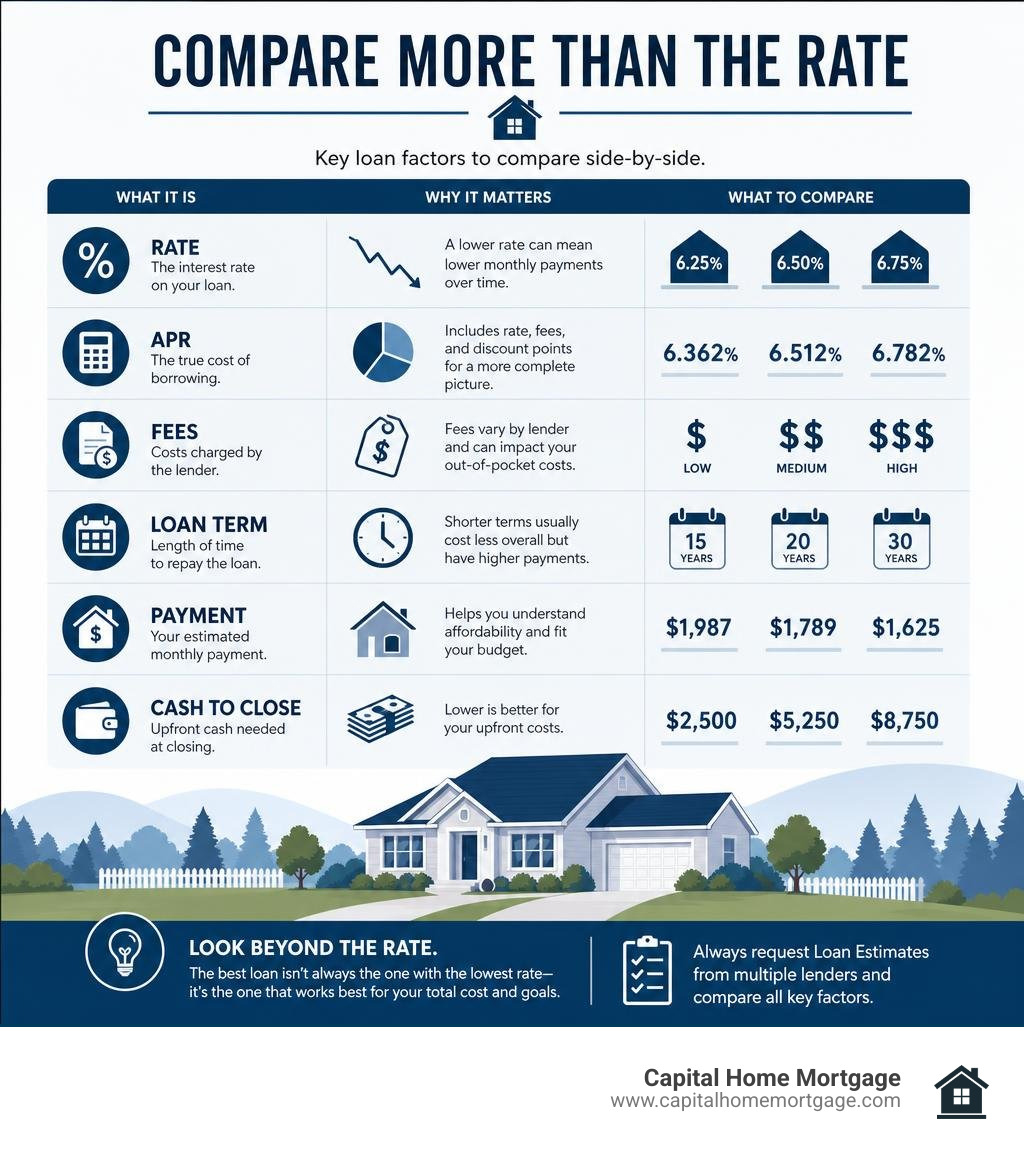
The best way to compare home loan rates is to look beyond the advertised interest rate. Request Loan Estimates from at least three lenders, compare each loan’s APR, lender fees, points, monthly payment, and cash needed at closing. Then choose a loan term and program that fits both your budget today and your long-term plans.
As of August 27, 2026, the national average for a 30-year fixed mortgage was 6.66%, while the 15-year fixed average was 5.98%. These are useful benchmarks, but your quote can differ based on your credit profile, down payment, loan amount, property type, and whether you use a conventional, FHA, VA, or USDA loan.
At today’s rates, a lower rate can make a meaningful difference in monthly costs. But a lower rate with high points or fees is not always the lower-cost loan. For first-time buyers especially, the goal is usually to balance an affordable payment with a clear path to closing – not to chase a headline rate that may not match the final loan terms.
I am Dale Gremillion, a manager at Capital Home Mortgage with more than 26 years of experience helping borrowers evaluate home loan rates and financing options. Next, we will look at today’s rate benchmarks and the economic forces that can move them.
Understanding Current Home Loan Rates in 2026

Navigating the mortgage landscape in August 2026 requires understanding where the market stands and how national averages translate to your local market. Conforming loan limits set by the Federal Housing Finance Agency (FHFA) currently sit at $832,750 for single-family homes in most parts of the country, allowing many borrowers to secure competitive conventional financing without needing jumbo loans.
According to recent industry tracking, including Mortgage rates Aug. 26, 2026 | Fortune, daily conforming averages have hovered in the 6.66% to 6.70% zone for standard 30-year fixed loans, while 15-year terms average between 5.85% and 5.99%. Meanwhile, hybrid options like the 5/1 adjustable-rate mortgage (ARM) sit near 6.22%, making up about 7.7% of total mortgage application volume.
Because mortgage pricing is influenced by regional factors, property taxes, and local real estate dynamics, borrowers exploring specific state conditions can review Texas Mortgage Rates or state-specific averages in our service areas to see how local markets behave.
Benchmark Averages and Year-Over-Year Shifts
Freddie Mac’s Primary Mortgage Market Survey (PMMS) reported that the 30-year fixed-rate mortgage averaged 6.66% as of August 27, 2026, ticking up slightly from 6.65% the previous week. One year ago, that same 30-year benchmark averaged 6.56%. The 15-year fixed mortgage averaged 5.98%, up from 5.95% the prior week and up from 5.69% at this time last year.
Daily tracker figures from sources such as Today’s Mortgage Rates, August 28, 2026: 30-Year Rates Remain Unchanged at 6.73% show how headline rates can fluctuate within a narrow band across different lender platforms. Over the past 52 weeks, rates have ranged from a low of 5.90% in late February 2026 to highs near 6.82%. In fact, borrowing costs have increased nearly 70 basis points from their late-February lows due to persistent economic strength and bond market adjustments.
Macroeconomic Drivers Moving Home Loan Rates
Mortgage rates do not move in a vacuum, nor does the Federal Reserve set mortgage rates directly. Instead, the Fed sets the federal funds target rate (currently holding at 3.50% to 3.75%), which influences short-term borrowing costs. Fixed mortgage rates correlate most strongly with the 10-year U.S. Treasury yield and mortgage-backed securities (MBS) trading.
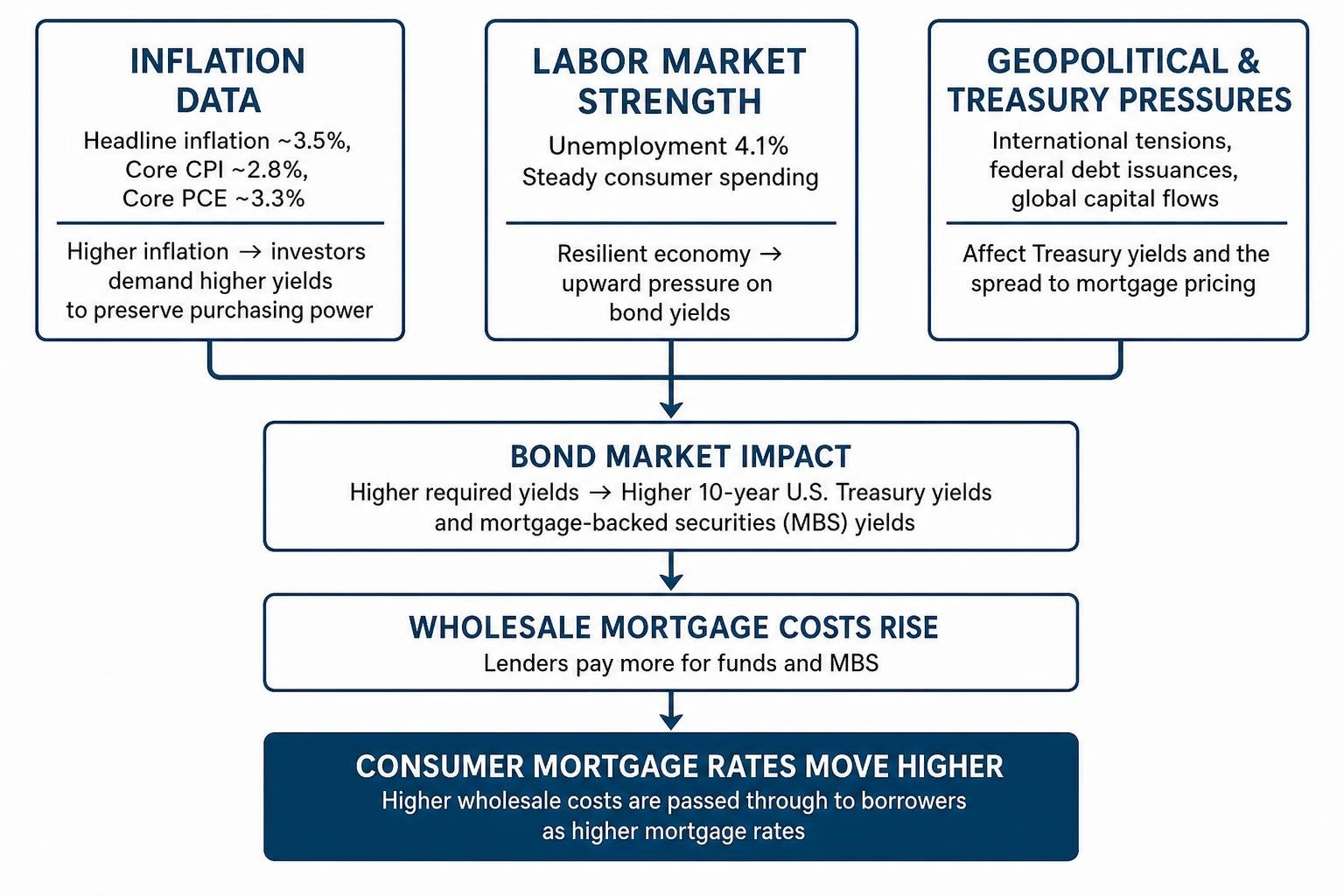
Key economic indicators driving day-to-day rate movement include:
- Inflation Data: With headline inflation around 3.5%, Core CPI at 2.8%, and Core PCE near 3.3%, bond investors demand higher yields to preserve purchasing power.
- Labor Market Strength: An unemployment rate of 4.1% alongside steady consumer spending shows an economy resilient enough to keep upward pressure on bond yields.
- Geopolitical and Treasury Pressures: International tensions, federal debt issuances, and global capital flows regularly alter the spread between 10-year Treasury yields and consumer mortgage pricing.
Comparing Loan Terms and Assistance Programs

Choosing the right mortgage structure involves balancing what you can afford each month against what you will pay over the full life of the loan. While Texas Conventional Home Loans remain the standard choice for borrowers with strong credit and down payments of 3% to 20%, alternative terms and government-backed programs provide critical pathways for different household situations.
15-Year vs. 30-Year Loan Structure Tradeoffs
The 30-year fixed loan is the most popular mortgage product in America because it spreads amortization across 360 payments, keeping the required monthly payment manageable. A 15-year mortgage offers a lower interest rate but compresses the principal payoff into 180 months, requiring a significantly higher monthly outlay while cutting total interest by hundreds of thousands of dollars.
| Loan Term | Benchmark Rate | Loan Amount | Monthly Principal & Interest | Total Interest Paid | Total Cost over Life of Loan |
|---|---|---|---|---|---|
| 30-Year Fixed | 6.66% | $350,000 | $2,249 | $459,710 | $809,710 |
| 15-Year Fixed | 5.98% | $350,000 | $2,949 | $180,820 | $530,820 |
| Difference | -0.68% | $350,000 | +$700 / month | -$278,890 total | -$278,890 saved |
For many buyers, selecting a 30-year term and making voluntary extra principal payments provides the ideal middle ground: you get the interest-saving power of accelerated amortization without legally locking yourself into a higher monthly commitment.
Government Programs and First-Time Buyer Support
For buyers working with smaller down payments or lower credit scores, government-insured loan programs offer flexible underwriting standards:
- FHA Mortgages: Insured by the Federal Housing Administration, Texas FHA Home Loans allow down payments as low as 3.5% with credit scores of 580 or higher, and rates often price 20 to 30 basis points below conventional loans.
- VA Mortgages: Military service members, veterans, and eligible surviving spouses can access VA Home Loans, which feature zero down payment requirements and no monthly private mortgage insurance (PMI).
- USDA Mortgages: Designed for rural and suburban homebuyers meeting specific income criteria, USDA Home Loans also provide 100% financing options with competitive government-backed rates.
Actionable Borrowing and Refinancing Strategies
Getting the lowest possible rate is not just about market timing; it comes down to proactive financial preparation and leveraging the right calculation tools.
Smart Tactics to Secure the Best Home Loan Rates
To put yourself in the best borrowing position:
- Optimize Your Credit Profile: Aim to raise your credit score above key thresholds (740+) to eliminate loan-level price adjustments.
- Compare Multiple Quotes: Comparing estimates from multiple direct lenders can save borrowers hundreds of dollars each year in interest.
- Explore Discount Points vs. Lender Credits: Paying discount points upfront lowers your permanent interest rate, which makes sense if you plan to stay in the home long enough to pass the break-even point.
- Use Interactive Tools: Test various down payments and rate structures using Texas Mortgage Calculators to understand your total monthly obligations, including taxes and insurance.
Refinance Opportunities and Break-Even Calculations
If you purchased your home when rates peaked above 7.25%, an interest rate reduction down to 6.66% can produce real monthly savings. To determine whether refinancing is financially sound, calculate your break-even period:
$$\text{Break-Even Timeline (Months)} = \frac{\text{Total Closing Costs}}{\text{Monthly Payment Savings}}$$
For example, if refinancing a $350,000 balance from 7.25% to 6.66% reduces your principal and interest payment by $139 per month, and your closing costs total $3,200, your break-even point is approximately 23 months ($3,200 ÷ $139). If you plan to remain in the property past that window, the refinance pays for itself. Homeowners looking to consolidate high-interest debt or fund home improvements can also explore a Cashout Mortgage Refinance to leverage accumulated home equity.
Investment Property Financing vs. Primary Residences
Financing a non-owner-occupied rental property differs substantially from buying a primary residence. Lenders price investment mortgages with higher risk premiums, typically adding an interest rate surcharge of 0.50% to 0.75% above standard owner-occupied rates.
Key distinctions for real estate investors include:
- Larger Down Payments: Most conventional investment loans require a minimum 20% to 25% down payment.
- Cash Flow Analysis: Real estate investors often utilize Debt Service Coverage Ratio (DSCR) financing, qualifying based on the property’s rental income rather than personal tax returns.
- Market Dynamics: While higher rates increase borrowing costs, they can also decrease retail buyer competition, giving investors enhanced leverage to negotiate favorable purchase prices and seller credits.
Frequently Asked Questions About Home Loan Rates
Should I lock or float my mortgage rate in today’s market?
If you are within 30 to 45 days of closing, locking your rate is generally the safest move to protect against market volatility. If your closing is 60 or more days out, you might consider floating only if your lender offers a float-down option, which allows you to capture lower rates if the market improves before settlement.
How do credit scores impact home loan pricing?
Credit scores directly affect your loan-level price adjustments (LLPAs). A borrower with a 760 FICO score will receive a lower interest rate and lower private mortgage insurance premiums than a borrower with a 640 score applying for the same conventional loan amount.
What is the difference between mortgage interest rate and APR?
The interest rate is the baseline annual cost you pay to borrow the principal balance. The Annual Percentage Rate (APR) includes the interest rate plus origination charges, discount points, processing fees, and other financing costs, providing a truer picture of your total annual borrowing expense.
Conclusion
Finding the right mortgage requires balancing rate benchmarks, loan structures, and closing costs against your household budget. At Capital Home Mortgage, we are a direct, full-service mortgage lender offering complete in-house processing and underwriting. This structure allows us to provide rapid approvals, on-time closings, and dedicated loan officer guidance from application through funding.
Whether you are buying your first home, upgrading, or refinancing an existing mortgage, our team is here to tailor the right loan solution for your needs. Explore our comprehensive Home Loans programs today to get started with a personalized rate quote.


