Why 30-Year Mortgage Rates for Manufactured Homes Matter in 2026
30-year mortgage rates for manufactured homes are more accessible in 2026 than many buyers realize — but they come with specific conditions most people don’t know about upfront.
Here’s a quick snapshot of where rates stand right now:
| Loan Type | Typical 2026 Rate | Max Term | Land Required? |
|---|---|---|---|
| 30-year manufactured home mortgage | 6.75% – 7.5% | 30 years | Yes |
| Chattel (personal property) loan | 8% – 12% | 20 – 25 years | No |
| Site-built home mortgage | ~6.63% | 30 years | Yes |
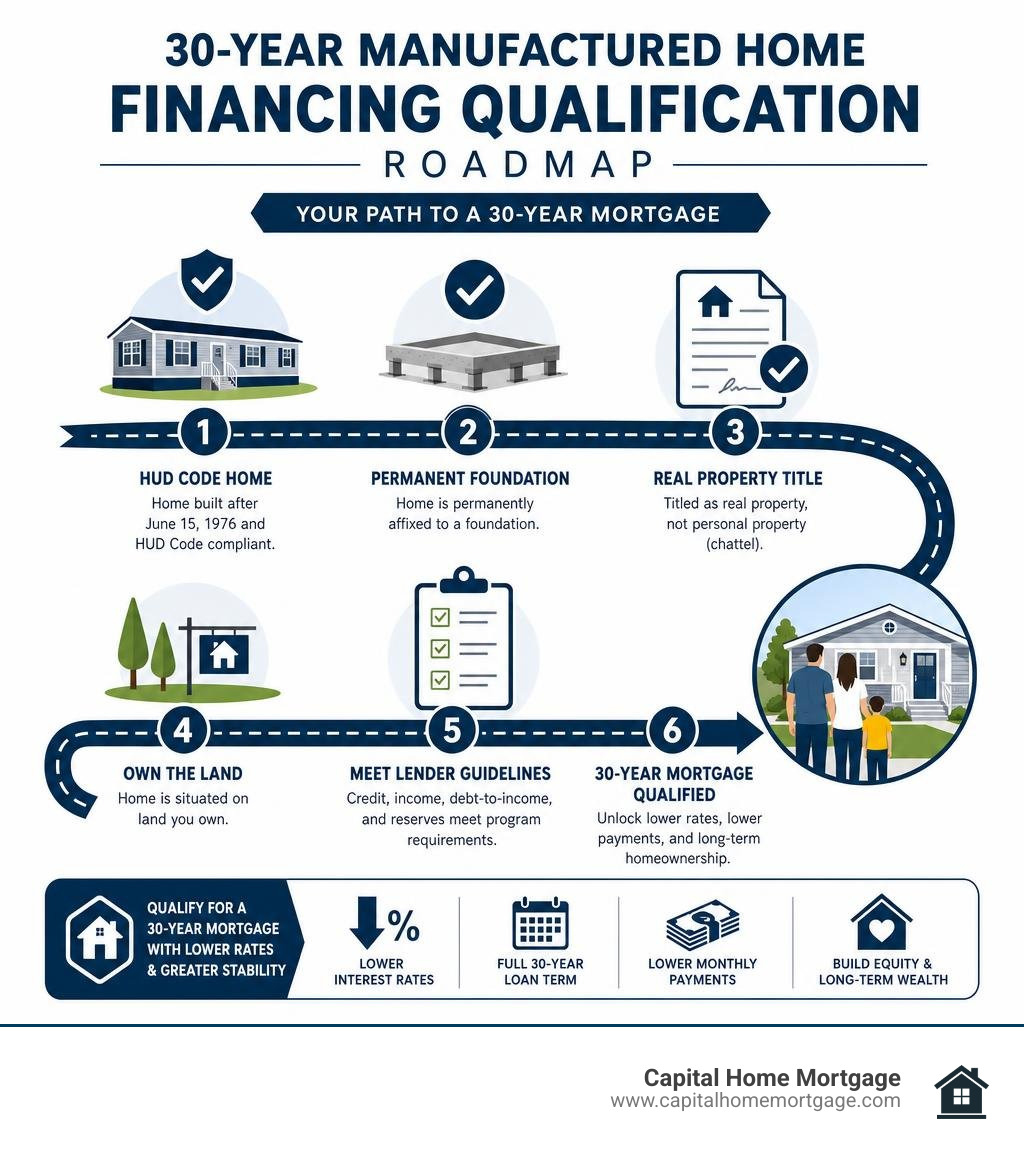
The key takeaway: To get a true 30-year term on a manufactured home, the home must be:
- Built after June 15, 1976 (HUD Code compliant)
- Placed on a permanent foundation
- Titled as real property — not personal property
- Situated on land you own
Without these conditions, lenders treat the home as personal property and issue chattel loans instead. Chattel loans max out at 20 to 25 years and carry significantly higher interest rates — often costing hundreds of dollars more per month.
This matters more than most people realize. On a $100,000 loan, the difference between a 9% chattel loan and a 7% 30-year mortgage can be $268 per month — money that adds up fast over the life of a loan.
The challenge is real, though. Manufactured home mortgage applications face a roughly 50% denial rate, compared to just 10% for conventional site-built homes. A major reason? Buyers apply to lenders who don’t even offer manufactured home mortgage products.
That’s exactly why having the right guidance — and the right lender — makes all the difference.
I’m Dale Gremillion, a mortgage professional with over 26 years of experience at Capital Home Mortgage helping borrowers navigate complex loan products, including 30-year mortgage rates for manufactured homes. In this guide, I’ll walk you through exactly what it takes to qualify, which programs to use, and how to avoid the mistakes that derail most applications.
2026 Guide to 30 Year Mortgage Rates Manufactured Home Applicants Face
As we navigate the 2026 housing market, factory-built housing has shifted from an alternative option to a mainstream real estate strategy. Driven by standard home price increases, buyers across the country are choosing high-quality manufactured homes to build long-term wealth. However, securing financing requires understanding how lenders price these loans.
Starting around 6.75% for top-tier applicants, 2026 Manufactured Home Interest Rates reflect a dynamic pricing model. The interest rate you receive depends heavily on how the home is classified legally, the foundation structure beneath it, and whether the land and home are purchased together.
| Feature | 30-Year Real Property Mortgage | 20-Year Personal Property (Chattel) Loan | Standard Site-Built Mortgage |
|---|---|---|---|
| Average 2026 Interest Rate | 6.75% – 7.88% | 8.00% – 12.00% (Median ~9.5%) | 6.50% – 6.75% (Median ~6.63%) |
| Maximum Loan Term | 30 Years | 20 – 25 Years | 30 Years |
| Land Ownership Requirement | Required (Deeded Land) | Not Required (Leased Lot or Park) | Required |
| Legal Classification | Real Estate (Real Property) | Personal Property (Vehicle Title) | Real Estate (Real Property) |
| Typical Down Payment | 0% – 3.5% | 5% – 20% | 3% – 5% |
Comparing 30 Year Mortgage Rates Manufactured Home Options to Site-Built Loans
When comparing 30 year mortgage rates manufactured home borrowers receive against site-built home rates, you will notice a modest spread. Historically, mortgage underwriting algorithms priced manufactured home loans slightly higher due to perceived secondary market risk and specialized appraisal requirements. Today, that interest rate premium is surprisingly small — typically between 0.25% and 1.25% higher than a traditional site-built mortgage, provided the unit is attached to owned land as real estate.
Lenders evaluate risk based on collateral durability. Long-term studies show that manufactured homes permanently affixed to owned land appreciated by 211.8% between 2000 and 2024, virtually mirroring the 212.6% appreciation recorded by traditional site-built residences. By staying informed on 2025 Manufactured Home Trends to Know Before You Buy, buyers can structure their purchase to secure rates close to traditional mortgage baselines.
Monthly Savings: 30-Year Mortgages vs. 20-Year Chattel Loans
The primary reason to pursue real property classification is the drastic difference in monthly payment between a standard mortgage and a chattel loan. Chattel loans act like vehicle financing; they are secured only by the manufactured home unit, not the underlying land. Consequently, chattel lenders charge a substantial risk premium, with median rates floating around 9.5% and loan terms capped at 20 to 25 years.
Let’s break down the math for a $100,000 loan balance:
- 20-Year Chattel Loan at 9.00%: The principal and interest payment equals approximately $899 per month.
- 30-Year Fixed Mortgage at 7.00%: The principal and interest payment drops to approximately $631 per month (excluding mortgage insurance).
That translates to a direct saving of $268 every single month. Over a five-year period, holding a 30-year mortgage puts $16,080 back into your pocket compared to standard chattel terms. Reviewing a detailed Mobile Home 30 Year Mortgage Analysis confirms that stretching the repayment term over 30 years provides crucial cash flow relief for primary residence buyers.
Property Requirements and Land Ownership Criteria for 30-Year Terms
Securing a 30-year mortgage on a manufactured home requires meeting strict property qualification rules. Mortgage originators cannot issue a 30-year government-backed or conventional mortgage unless the property transitions from personal property to real property.
HUD Code Compliance and Foundation Standards
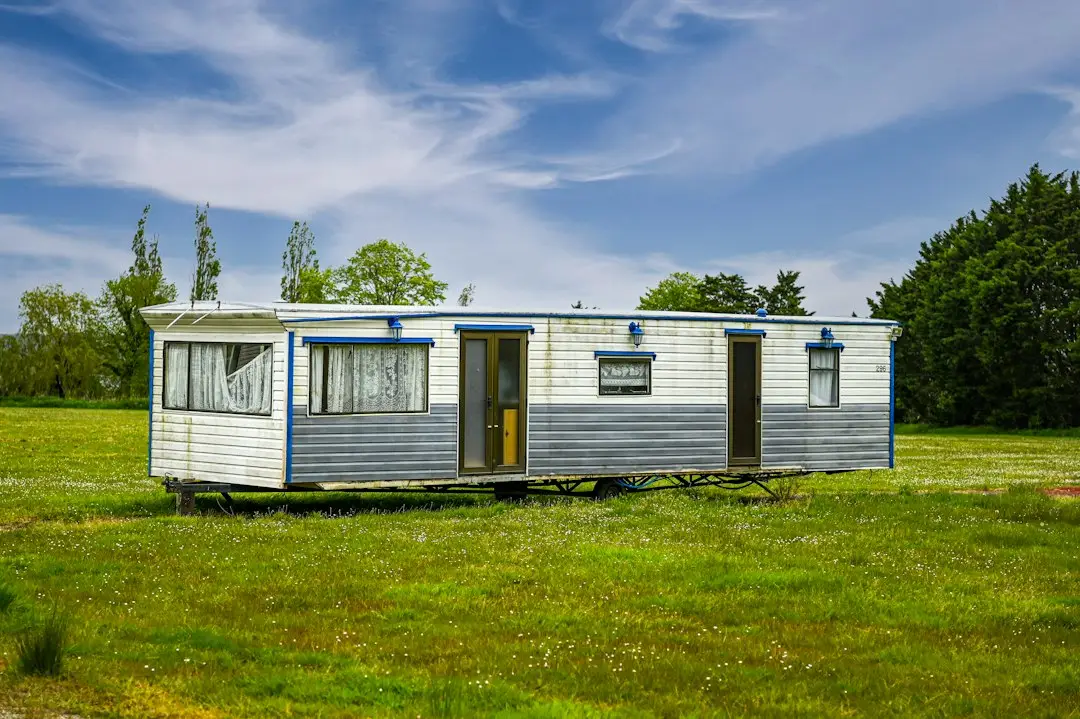
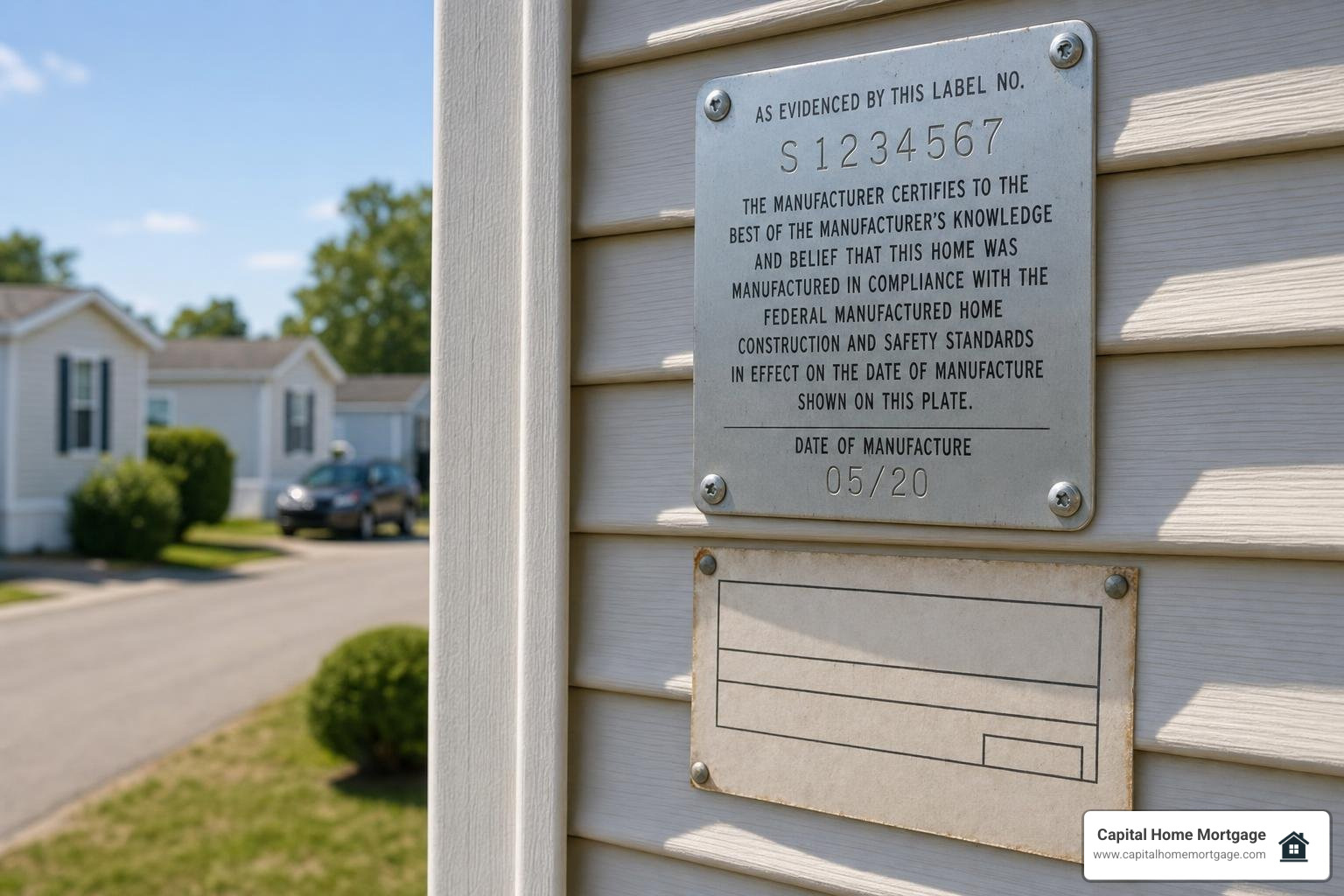
First, federal guidelines dictate that the home must be constructed after June 15, 1976, in accordance with the Federal Manufactured Home Construction and Safety Standards (the HUD Code). Structures built before this date are legally designated as “mobile homes” and are ineligible for 30-year mortgage financing.
To verify eligibility, underwriters look for two items:
- HUD Certification Tag: A metallic red plate affixed to the exterior rear of each transportable section of the unit.
- HUD Data Plate: A paper certificate attached inside the home (usually near the electrical main panel, kitchen cabinet, or bedroom closet) listing structural zone ratings and serial numbers.
If metal tags are missing or damaged, buyers must obtain a official Label Verification Letter from the Institute for Building Technology and Safety (IBTS). Additionally, the structure must be installed on a engineered permanent foundation that complies with HUD Handbook 4930.3G (Permanent Foundations Guide for Manufactured Housing). A licensed professional engineer must inspect and certify that the foundation supports pured concrete footings, masonry piers, and proper tie-down anchors capable of resisting local wind uplift forces. Foundation engineering inspections typically cost between $300 and $500.
Land Ownership vs. Leased Land Constraints
Land ownership is the single biggest deciding factor between personal property financing and a 30-year mortgage. If you place a manufactured home on rented land in a mobile home park or community, you cannot obtain a standard 30-year mortgage because you do not hold real estate title to the land.
There is a minor exception for formal leasehold estates. Certain federal programs permit 30-year terms on leased land if the lease agreement meets strict requirements:
- The lease must be written, assignable, and fully recorded in county land records.
- The remaining lease term must exceed the mortgage repayment term by at least 5 years (for example, a 35-year total lease length for a 30-year loan).
Because park lot leases rarely offer 35-year guarantees, purchasing land alongside the home remains the most direct route to lower interest rates. If you are exploring regional purchasing rules, reviewing guides like How to Finance a Mobile Home in Texas: Your 2025 Guide will help you understand state land-and-home packaging rules.
Comparing 30-Year Loan Programs: FHA Title II, VA, USDA, and Conventional
Multiple major loan programs support 30-year terms for manufactured homes. Understanding their structural differences allows you to choose the product best aligned with your financial profile.
- FHA Title II: Minimum 580 credit score for 3.5% down; requires permanent foundation; allows multi-section and single-section units on owned land.
- VA Loans: 0% down payment for eligible veterans and active-duty military; no monthly mortgage insurance premium; requires primary residence occupancy.
- USDA Rural Development: 0% down payment; guaranteed 30-year fully amortized term (direct program can extend 33 to 38 years); subject to geographic rural eligibility limits.
- Conventional (Fannie Mae / Freddie Mac): Minimum 620 credit score; 3% to 5% down payment; strict architectural features required for specialty products like MH Advantage and CHOICEHome.
FHA Title II vs. VA and USDA 30-Year Loans
Government-backed mortgages provide flexible paths to homeownership for manufactured housing. It is vital to distinguish between FHA Title I and FHA Title II:
- FHA Title I finances personal property (chattel) or lot improvements, with maximum loan terms capped at 20 years for single-wide units and 25 years for multi-section homes.
- FHA Title II operates as a standard real estate mortgage, extending full 30-year financing terms. FHA Title II requires a down payment of just 3.5% for borrowers with credit scores at or above 580 (or 10% down for scores between 500 and 579). FHA loans require an upfront mortgage insurance premium (MIP) of 1.75% alongside an annual MIP fee.
VA loans offer exceptional terms for eligible service members and veterans, providing a true 0% down payment 30-year mortgage option without ongoing monthly mortgage insurance. Meanwhile, USDA Rural Development loans offer 0% down payment 30-year options for homes located in qualified rural zones. USDA direct programs can even extend repayment terms up to 33 or 38 years for low-income applicants. If you are looking across Western markets, checking resources like How to Qualify for a Manufactured Home Loan in Idaho clarifies how location-based government programs operate.
Conventional Options: Fannie Mae MH Advantage and Freddie Mac CHOICEHome
For buyers with stronger credit profiles, conventional loan programs backed by Fannie Mae and Freddie Mac offer low interest rates and reduced long-term insurance costs.
Specialty programs like Fannie Mae’s MH Advantage and Freddie Mac’s CHOICEHome offer 30-year conventional financing with down payments as low as 3%. However, the home must be manufactured with specific aesthetic features that blend seamlessly into traditional neighborhoods:
- A roof pitch of 4/12 or steeper with eaves extending 4 inches or more.
- Covered entryways, porches, or dormers (such as a 72-square-foot covered porch).
- Drywall interiors, Low-E energy-efficient windows, and upgraded exterior siding materials.
Standard conventional programs also support traditional double-wide and single-wide manufactured homes outside these design programs, typically requiring a minimum credit score of 620 and down payments starting around 5%. Homebuyers looking into Southwestern real estate markets can reference Arizona Manufactured Home Loans for localized conventional application guidelines.
Title Retirement: Converting Personal Property to Real Estate
To lock in a 30 year mortgage rates manufactured home loan, you must complete the process known as “title retirement” or legal affixture. By default, factory-built units leave the manufacturing facility titled as motor vehicles through state departments of transportation. Converting the home into real estate integrates it permanently into the land deed.
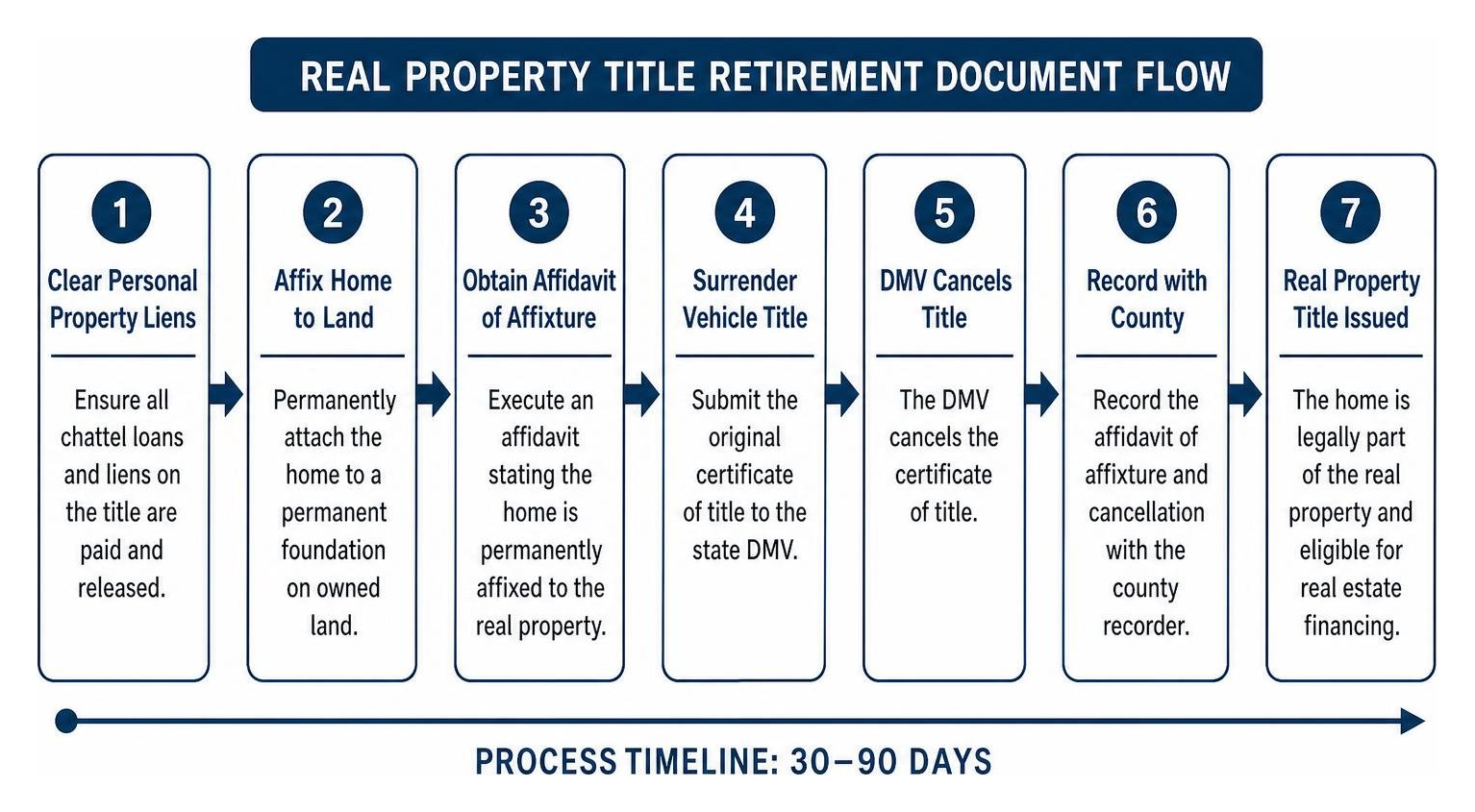
Step-by-Step Title Conversion Process and Timeline
Converting personal property to real estate follows a precise legal sequence that generally takes 30 to 90 days to process depending on local authority timelines:
- Clear Personal Property Liens: Conduct a search to ensure any pre-existing chattel loans or personal property liens against the vehicle title are fully satisfied and released.
- Install Foundation and Secure Certification: Install the home onto an engineered permanent foundation system and obtain a formal engineer certification letter verifying compliance with HUD standards.
- Draft and Sign Affidavit of Affixture: Complete an official Affidavit of Affixture (or Affidavit of Surrender) detailing the property’s parcel number, serial numbers, and HUD tag numbers. This document must be notarized and recorded in the local county land records.
- Surrender Title to the DMV: File the recorded affidavit along with the original Certificate of Title (or Manufacturer’s Statement of Origin) with the state motor vehicle department to officially cancel the vehicle title.
- Reclassify for Local Taxation: The county tax assessor updates property records, shifting the home from personal property tax rolls to real property assessment rolls.
Total filing, legal, and engineering costs for title retirement usually range between $500 and $2,000. Understanding these administrative legal steps is essential, as detailed in this Legal Guide on How Long You Can Finance a Mobile Home. Buyers navigating East Coast markets can review Best Loan Options for Buying a Manufactured Home in Florida to see how local recording offices process legal conversions.
How to Qualify for the Best 30 Year Mortgage Rates Manufactured Home Lenders Offer
Getting approved at the lowest possible interest rate requires preparing your financial documentation early:
- Optimize Credit Scores: While FHA allows scores starting at 580, aiming for a 620 to 680+ credit score unlocks conventional programs and significantly lowers annual mortgage insurance rates.
- Manage Debt-to-Income (DTI) Ratios: Keep total monthly debt obligations (including prospective mortgage principal, interest, taxes, and insurance) under 43% to 45% of gross monthly income. Manual underwriting guidelines often cap DTI between 31% and 43%.
- Document Property Specifics Early: Gather the original sales agreement, HUD tag numbers, data plate photographs, and foundation engineer reports before formal underwriting begins.
- Budget for Total Site Setup Costs: Avoid funding gaps by accounting for site preparation, foundation construction ($10/sq ft on average), utility hookups, and delivery fees upfront.
For a thorough checklist of requirements, refer to the 30-Year Loan Qualifications for Manufactured Homes guide.
Frequently Asked Questions About Manufactured Home Mortgages
Can you get a 30-year mortgage on a manufactured home in a park?
Generally, no. Mortgages with 30-year terms require real property classification, which depends on land ownership. Homes located inside leased-land mobile home parks or rented lots are classified as personal property. They must be financed using chattel loans, which carry higher interest rates and max out at 20 to 25 year terms.
What is the oldest manufactured home eligible for a 30-year loan?
The strict cutoff date is June 15, 1976. Lenders cannot originate a 30-year conventional or government-backed mortgage on any factory-built home constructed prior to this date because older units do not meet federal HUD safety codes. Additionally, the property appraiser must certify that the home has a remaining economic useful life that meets or exceeds the 30-year loan term.
What documentation is required for a 30-year manufactured home mortgage?
Borrowers must submit standard mortgage documents alongside specialized manufactured housing paperwork:
- Standard Form 1003 Uniform Residential Loan Application.
- W-2 forms, tax returns, and recent pay stubs.
- Photographs of the exterior metal HUD Certification Tags and interior paper HUD Data Plate.
- Professional foundation engineering certification confirming HUD-4930.3G compliance.
- Proof of title retirement (recorded Affidavit of Affixture or DMV title cancellation receipt).
Conclusion
Securing a 30 year mortgage rates manufactured home loan is one of the most effective strategies for achieving affordable homeownership in 2026. By purchasing land, installing a compliant foundation, and completing the title retirement process, buyers can replace high-cost chattel financing with predictable 30-year fixed real estate mortgages.
Navigating foundation certifications, HUD regulations, and state titling conversion requires an experienced mortgage partner. At Capital Home Mortgage, our direct, full-service operations streamline the entire experience. With our in-house underwriting and processing teams, we deliver efficient approvals, clear guidance, and stress-free closings tailored specifically to manufactured home buyers.
If you are evaluating property options and want to learn more about industry mechanics, explore the comprehensive Modular & Manufactured Home Financing Guide 2026. When you are ready to secure tailored competitive financing on your dream property, contact our loan specialists or review our regional resources at Texas Manufactured Home Loans to get started today.